A shared ledger
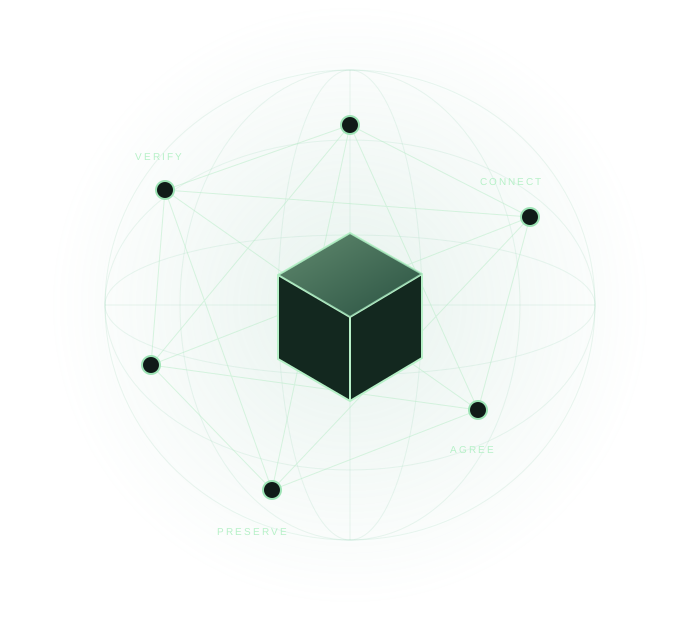
Instead of relying on one private copy, a network can maintain a common record. Different systems make different choices about who may read, submit or validate information.
A FIELD GUIDE TO BLOCKCHAIN
A shared record. A network of independent participants. A different way to agree on what happened.
01 / THE FUNDAMENTALS
A blockchain is a sequence of records linked through cryptographic references. Its value comes from the rules that participants use to verify and maintain that history—not from the word “blockchain” itself.
Instead of relying on one private copy, a network can maintain a common record. Different systems make different choices about who may read, submit or validate information.
Each block can refer to the hash of its predecessor. Altering earlier data changes the result of verification, making the connection between records meaningful.
Consensus defines how a network accepts its next valid state. Hashes alone do not provide agreement; participants, incentives and security assumptions matter too.
02 / THE CHAIN LAB
Build three linked records. Then change the middle record without updating its hash. The broken link becomes visible. Repairing this demonstration recalculates the chain.
——————Preparing your chain…
A local SHA-256 illustration, not a live blockchain. No wallet, transactions, fees or network consensus. Real networks require more than rebuilding hashes.
03 / WHERE IT CAN LEAD
Useful applications begin with a real coordination problem. A blockchain is one possible tool, not an automatic answer to every data problem.
Smart contracts run code under a network's rules. Their behavior depends on the code, its permissions and any outside information it receives. Automation does not make an agreement error-free.
A common record can help participants follow how entries evolve. The quality of the original input still matters: recording a claim does not prove that the claim was true.
04 / A FEW GOOD QUESTIONS
Cryptocurrencies are one application. Blockchain describes an approach to maintaining records; a particular network may also use a token for fees or incentives.
No. Software bugs, private-key loss, governance choices and external data can introduce risks. Assess the design, permissions and practical need before trusting a system.
No. This page is an educational guide. The chain lab runs entirely in your browser and never requests access to funds or a wallet.
UNDERSTANDING IS THE FIRST BLOCK.
Go deeper with primary documentation on blocks, consensus and smart contracts.